
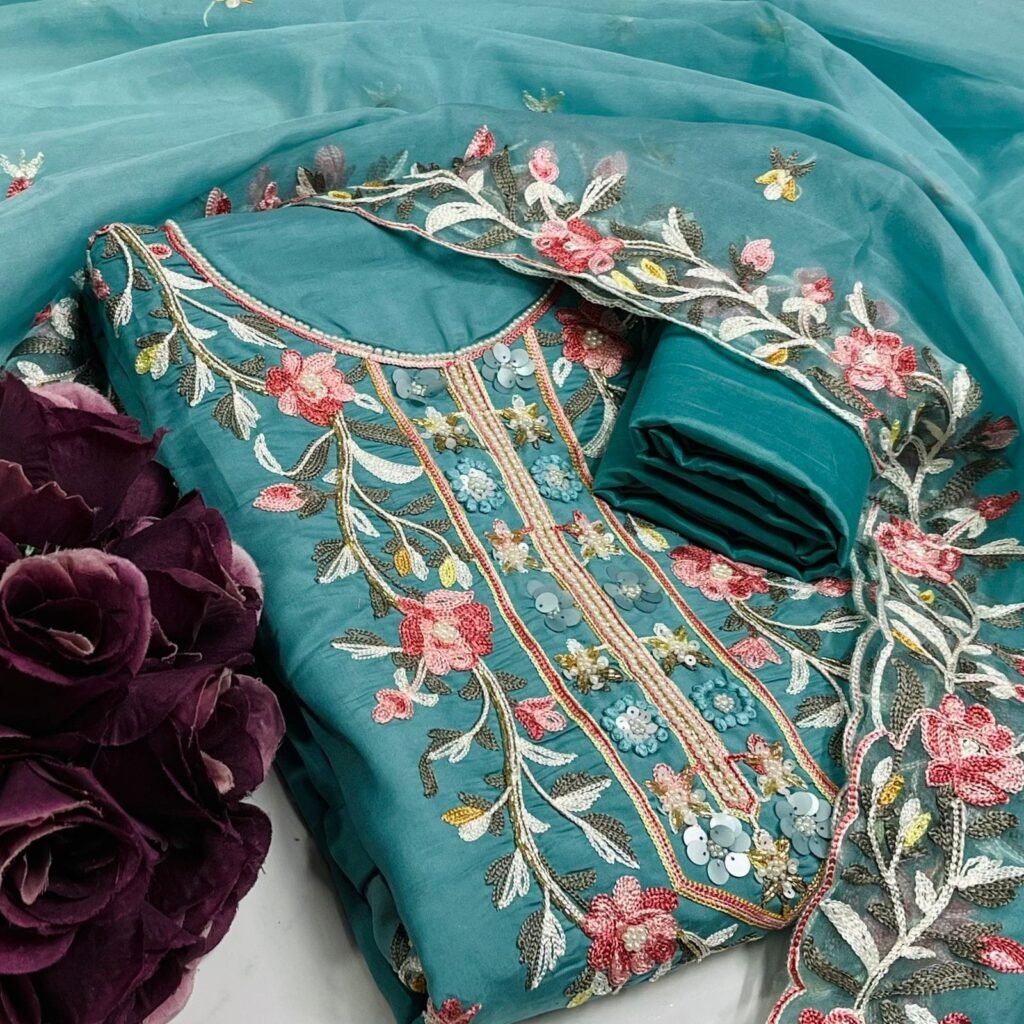
Introduction to Hand Embroidery
Hand embroidery holds a significant place in the rich tapestry of Pakistani culture, serving as both a form of artistic expression and a manifestation of heritage. The history of hand embroidery in this region can be traced back centuries, with techniques evolving over time while still retaining their traditional essence. Various styles, including mirror work, gota, zari, and intricately crafted thread embroidery, embody the skills and creative spirit of artisans who dedicate their lives to preserving these age-old practices.
Each of these embroidery techniques is defined by its unique characteristics. Mirror work, for instance, involves the meticulous placement of small mirrors onto fabric, creating a shimmering effect that reflects light and enhances the textural quality of garments. Gota, a technique that uses gold and silver ribbons to embellish clothing, reflects the luxurious nature of traditional attire often worn at festive occasions. Similarly, zari work involves intricate stitching with metallic threads, showcasing opulence and attention to detail. Thread embroidery, encompassing a wide array of styles such as phulkari and kantha, brings forth a vibrant spectrum of colors and patterns, which are often symbolic of local folklore and narratives.
The passing down of these techniques from one generation to the next is indicative of their importance in the social fabric of Pakistan. They not only serve as a means of livelihood for many artisans but also as a cultural heritage that is celebrated through various forms of clothing, from bridal outfits to everyday wear. As we embark on this exploration of hand embroidery’s revival in contemporary Pakistani fashion, it becomes essential to appreciate the artistry involved and the historical roots that have shaped its current form.
Traditional Crafts Making a Comeback
The resurgence of traditional crafts in the Pakistani fashion industry marks a significant shift towards the appreciation and integration of age-old artisanal techniques. Within this trend, various designers and artisans are effectively reinterpreting traditional methods such as mirror work, gota, and zari, merging them with contemporary aesthetics. This revival not only pays homage to the rich cultural heritage of Pakistan but also reflects a growing consumer demand for unique, handcrafted pieces that tell a story.
For instance, renowned designer Sana Safinaz has successfully incorporated gota embroidery into her latest collections, blending the intricate golden designs with modern silhouettes. This approach allows her to cater to a younger audience while maintaining a connection to heritage. Likewise, the use of mirror work in contemporary clothing has been evidenced by brands like Khaadi, which have introduced vibrant motifs that add a playful element to traditional attire. Such innovative applications are crucial in attracting a broader customer base and fostering a renewed interest in these crafts.
Moreover, designers like Elan and Alkaram Studios have showcased the use of zari work by infusing it into their festive collections, elevating traditional techniques through lavish, contemporary styling. This blend of tradition and modernity enables the revival of these crafts, transforming them into desirable fashion statements for events and celebrations. By spotlighting the artisans behind these traditional crafts, the fashion industry in Pakistan not only empowers local communities but also encourages sustainable practices.
The reinvigoration of traditional techniques within the fashion sector not only provides a strong sense of identity but also stimulates economic opportunities for artisans. As designers continue to innovate, the future appears promising for these crafts, heralding a renaissance where Pakistani fashion thrives on its heritage while looking towards a vibrant, artistic future.
Sustainability and Artisan Empowerment
The revival of hand embroidery in Pakistani fashion symbolizes a significant turning point that extends beyond aesthetic appeal, intertwining socio-economic aspects with sustainability. As consumers increasingly prioritize ethical and sustainable fashion choices, the resurgence of traditional crafts like hand embroidery offers a viable alternative to mass production, which often leads to environmental degradation and exploitation of labor.
Handcrafted methods provide several advantages, notably in reducing carbon footprints. Unlike factory-produced garments that rely heavily on machinery and synthetic materials, hand embroidery utilizes natural fibers and dyes, promoting a more sustainable approach to fashion. This method not only minimizes waste but also encourages a circular economy where artisans repurpose materials, thereby extending the lifecycle of their creations. The conscious decision to support handcrafted goods fits within a larger movement advocating for responsible consumption and environmental mindfulness.
Moreover, this revival significantly empowers local artisans, many of whom possess generations of ancestral skills. By creating a robust market for hand-embroidered pieces, we are not only preserving traditional craftsmanship but also ensuring a sustainable livelihood for these artisans. Interviews with local craftspeople highlight the transformative impact of this movement. For example, Amina, a skilled artisan from Sindh, shared, “The revival of hand embroidery has given us the opportunity to earn a fair wage for our work and keep our traditions alive.” Such testimonials underline the personal and communal benefits of embracing traditional methods.
Furthermore, job creation is a crucial outcome of this resurgence. With increasing demand for hand-embroidered fashion, more individuals are finding employment opportunities within their communities, promoting economic stability and social equity. This collaboration between consumers and artisans fosters a sense of connection and appreciation for craft, ultimately enriching the cultural fabric of society while paving the way for sustainable fashion practices.
The Future of Hand Embroidery in Pakistani Fashion
As we look towards the future, the potential of hand embroidery in the Pakistani fashion landscape remains vibrant and promising. Emerging trends indicate a growing appreciation for artisanal craftsmanship, as consumers increasingly seek out unique, handcrafted products that tell a story. This inclination is especially evident among younger generations who prefer sustainable fashion options that honor traditional techniques. The revival of hand embroidery is not merely a fleeting phase; it represents a cultural movement aimed at preserving identity through artistry.
The influence of global fashion on local artisans is also pivotal. As international designers incorporate handcrafted details into their collections, they simultaneously elevate the visibility of traditional crafts such as hand embroidery. This cross-pollination fosters collaborations between Pakistani artisans and global brands, creating a platform where traditional skills can be showcased on a wider stage. These partnerships can lead to improved livelihoods for artisans while enriching the global narrative of fashion by merging heritage with modern design.
Moreover, technology plays a crucial role in the future of hand embroidery. Innovative tools and platforms can help artisans scale their businesses while retaining the essence of craftsmanship. Social media, for instance, not only promotes their work but also facilitates direct-to-consumer sales, enabling artisans to engage with a broader audience. Educational initiatives that emphasize the artistry and skill required in hand embroidery are essential, as they inspire new generations to value these techniques. Workshops and online courses can help younger individuals learn these crafts, ensuring that rich traditions continue to thrive.
Ultimately, sustaining the revival of hand embroidery in Pakistani fashion relies on a collective effort, combining cultural appreciation, global collaboration, and technological advancement. By embracing these elements, the future of hand embroidery can flourish, maintaining its esteemed place within the fashion industry while inspiring new interpretations of this timeless art form.